
PP Interlocking Floor Tiles
Rubber Floor
PVC Sports Flooring
Pickleball Flooring
ZShuangmi240
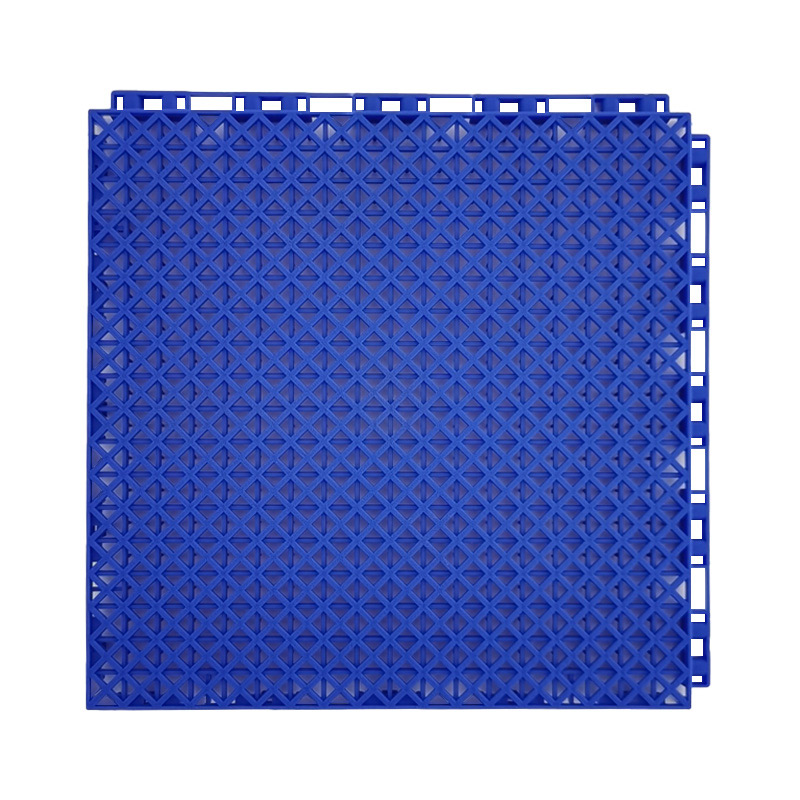
ZShuangmi240 double-layer suspended interlocking floor tile features a double-rice crisscross hollow anti-slip surface with thickened reinforced snap locks for fast installation. Dense underside support columns deliver effective shock absorption, rapid drainage, ventilation, and moisture protection.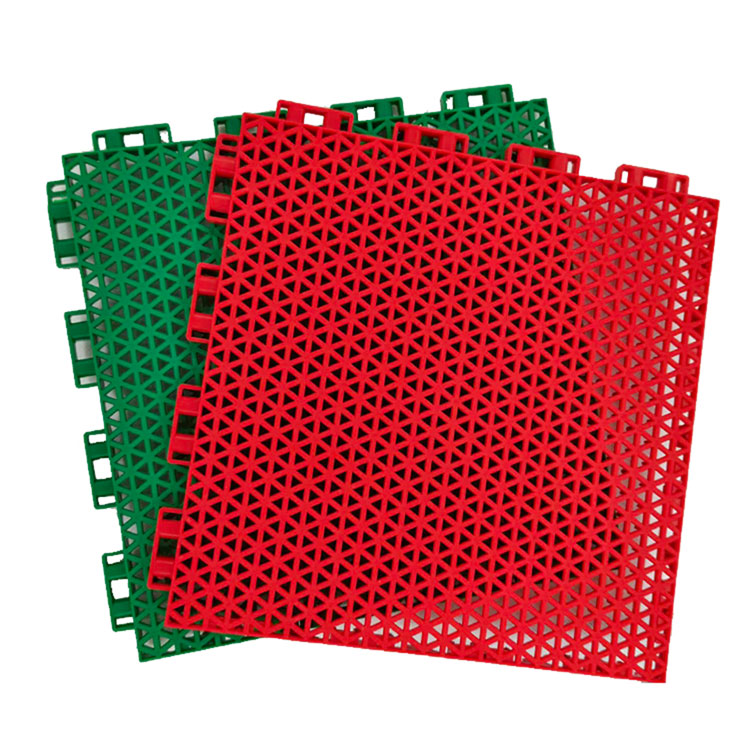
PP Interlocking Floor Tiles
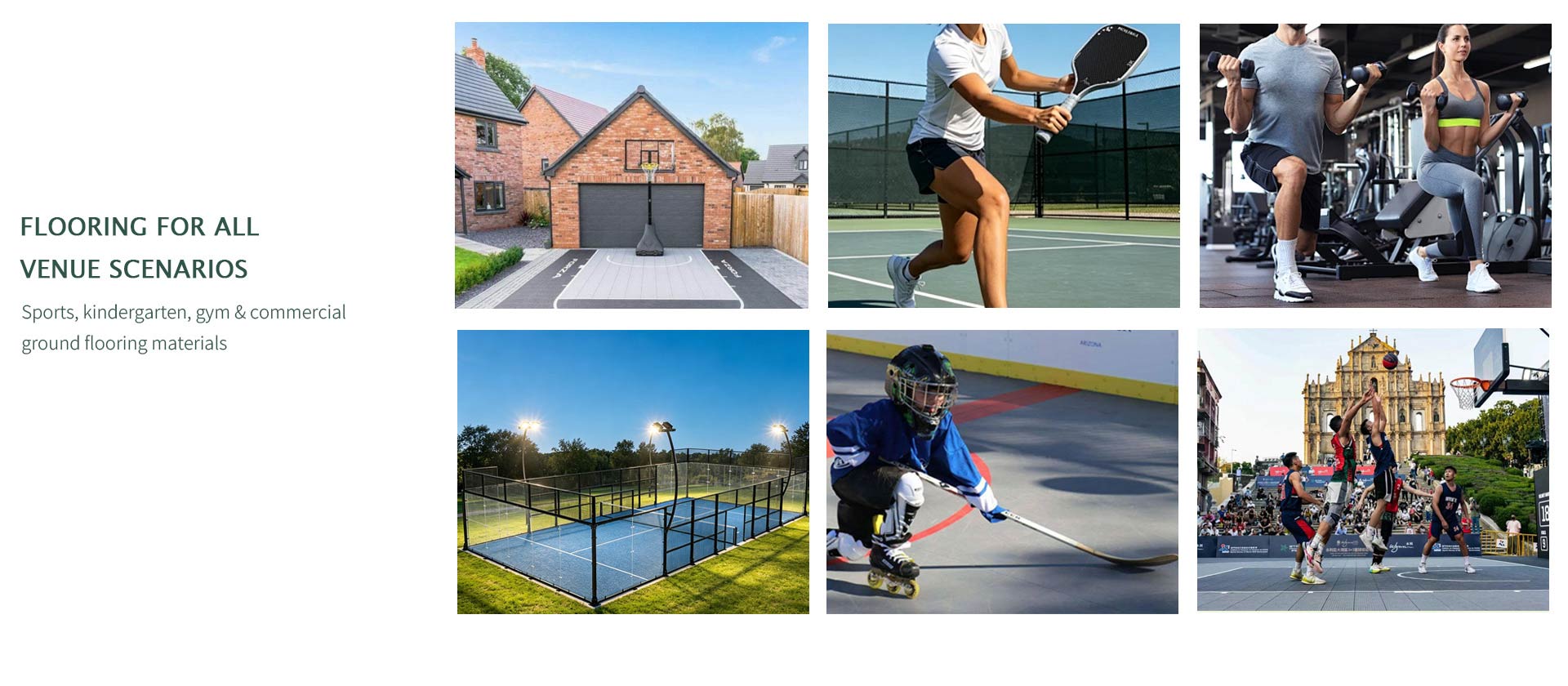
This snap-lock interlocking sports tile is precision injection-molded from high-density modified polypropylene (PP). Each tile measures 250 × 250 × 13.3 mm and weighs 185 g. The surface features a triangular open-grid pattern, with integrated snap-lock connectors on all four sides for a lightweight yet robust assembly — quick to install, built to last. Ideal for outdoor multi-sport courts, school playgrounds, kindergarten activity zones, residential pickleball courts, basketball courts, and a wide range of outdoor sports venues.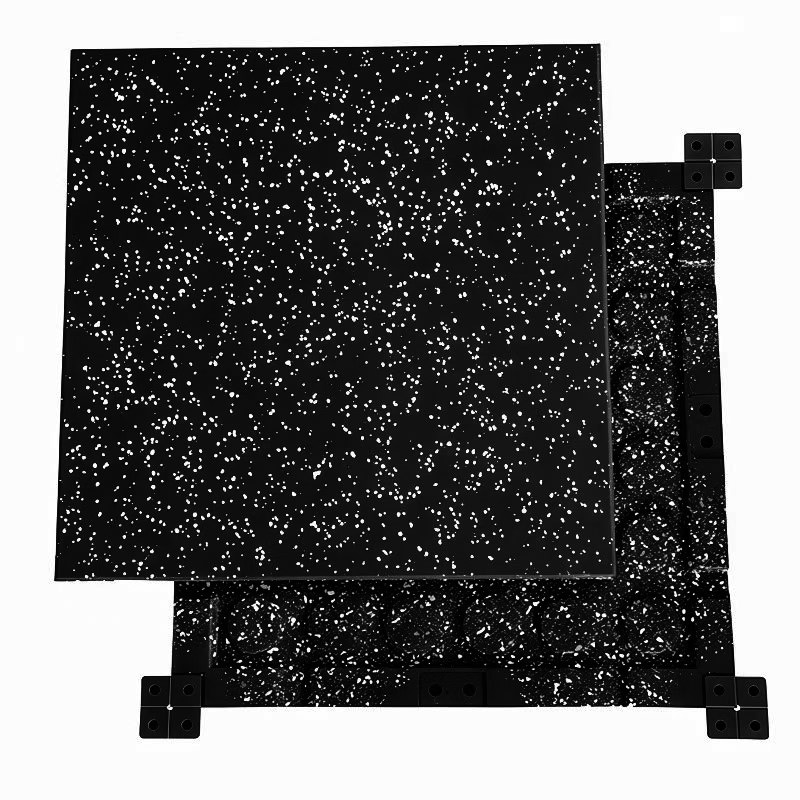
Rubber Floor
Rubber floor mats are modular ground protection materials manufactured by high-temperature thermal compounding with recycled rubber particles and EPDM colored rubber particles as core raw materials. They can be laid via interlocking assembly or direct tiling. Integrating shock absorption, noise reduction, anti-slip, wear resistance, impact resistance and eco-friendly properties, these mats fit various sports spaces including home gyms, commercial venues and school physical training rooms. Easy to assemble and reusable, they protect original floors and fitness equipment while greatly cutting noise generated by heavy weights hitting the ground, serving as a mainstream flooring solution for sports areas.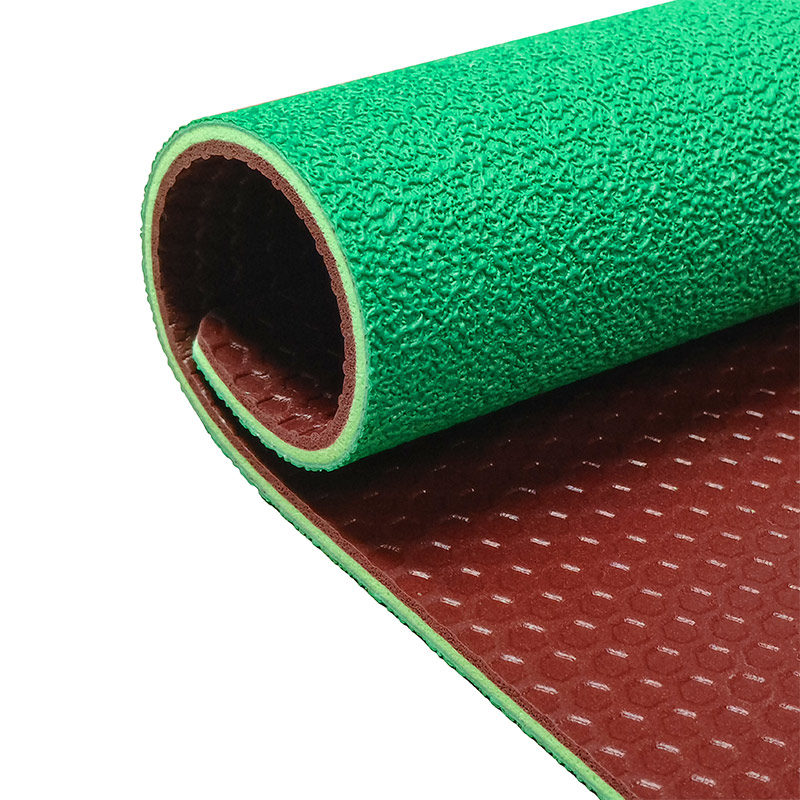
PVC Sports Flooring
PVC sports flooring is a professional elastic sports floor material made of eco-friendly polyvinyl chloride via multi-layer composite calendering technology, integrally laminated with a wear-resistant top layer, glass fiber stabilizing layer, high-elastic foam cushion layer and sealed bottom layer. It delivers standard sports shock absorption and rebound performance, superior anti-slip property, waterproof & moisture-proof performance, sound absorption and easy maintenance, meeting national standards for professional sports venues. It supports two construction solutions: full roll paving and sectional splicing. Suitable for indoor sports spaces including ball game courts, dance studios, campus fitness halls and comprehensive gyms, it balances sports safety, visual aesthetics and long-term durability, ranking as the mainstream paving material for professional indoor sports venues.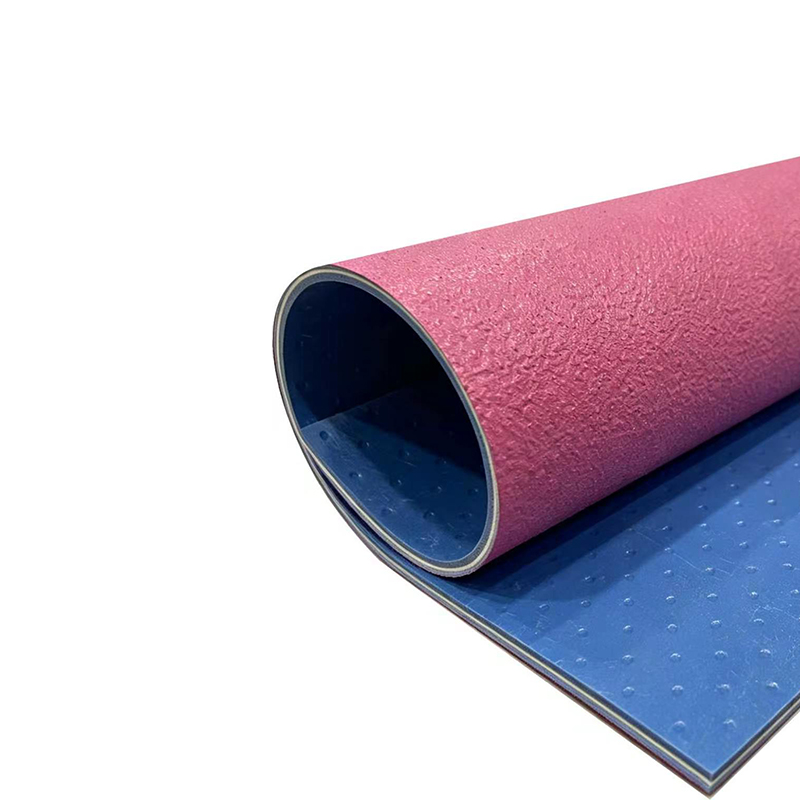
Pickleball Flooring
This full series of pickleball flooring rolls are professional indoor & outdoor sports floors made of PVC and modified acrylic composite materials. There are four styles available: Star Rain Sand, Emery Acrylic, Pickle Sand Acrylic and 360 Customized versions. The standard thickness is 3.0 mm, with an optional 2.0 mm thin version. All rolls come in a standard 1.8 m width and can be cut on demand. Customization of full-court colors and boundary lines is supported. The multi-layer composite structure delivers excellent wear resistance, anti-slip performance, shock absorption and UV aging resistance. It is ideal for professional clubs, private courts and temporary tournament venues, usable both indoors and outdoors. We offer a 3-year warranty for indoor installation and a 2-year warranty for outdoor installation, making it the dedicated professional flooring material for pickleball sports.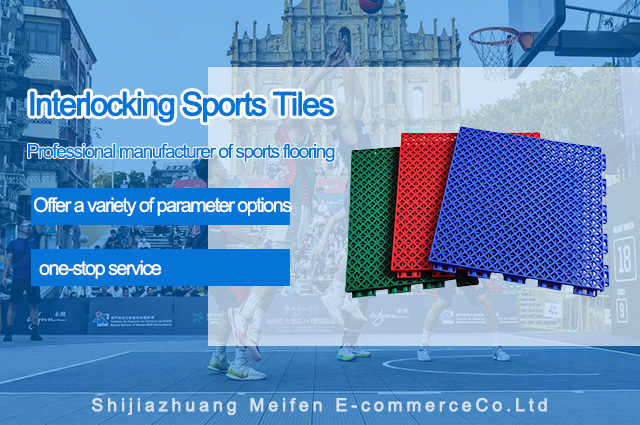
Full Standardized Performance & Technical Specifications
All parameters are based on our factory’s years of mass-production quality control standards and Chinese national testing report data, suitable for project submissions covering overseas private gardens, commercial sports halls, and school sports courts.
1. Raw Material & Density Specifications
– Primary materials: High-density modified polypropylene (PP) and soft thermoplastic elastomer (TPE)
– Raw material ratio: Stable and consistent — zero recycled or low-grade filler content
– Material integrity: Virgin-grade polymers only; no mixed recycled plastics
2. UV Resistance & Weathering Performance
– UV stabilizers added during the production process
– Formulated to outdoor weathering standards
– Long-term outdoor exposure does not cause fading, cracking, or embrittlement
– Suitable for high-temperature, heavy-rain, and other harsh outdoor environments
3. Load-Bearing Performance
– Meets standard static load requirements for conventional sports surfaces
– Suitable for public sports courts and commercial sports venue applications
4. Dry & Wet Slip Resistance (Coefficient of Friction)
– Surface anti-slip texture has undergone standard friction testing
– Maintains consistent grip on both dry and wet surfaces
– Meets overseas outdoor sports field safety requirements
– Reduces slip risk during wet-weather play
5. Low-Temperature / Freeze Resistance
– Formulation engineered for low-temperature environments
– Withstands temperatures as low as -30°C / -22°F
– No cracking or deformation during long-term outdoor installation in cold-climate regions
6. Superior Drainage Efficiency
– Hollow integrated grid drainage structure
– Excellent drainage speed — rainwater quickly permeates and drains away
– Eliminates standing water and muddy surface issues on outdoor courts
7. Expected Outdoor Service Life
– Based on years of feedback from completed projects both domestically and internationally
– Normal outdoor service life: 10+ years
Complete Standardized Foreign Trade Technical Document Package
1. Interlocking Sports Tiles — Technical Data Sheet (TDS)
A consolidated technical data sheet covering all fundamental physical performance parameters, formatted in a professional table layout — suitable for overseas project bidding and site approval submissions.
2. Product Material & Performance Specification Document (PDF)
A complete PDF document aggregating all product performance details: raw materials, weather resistance, slip resistance, drainage, freeze resistance, and more.
One-Stop Technical Value-Added Services for Overseas Distributors & Contractors
1.Online Professional Parameter Consultation
Our technical team provides remote walkthrough explanations of all product performance indicators, helping clients communicate with local project owners, site inspectors, and approval bodies to resolve technical questions.
2.Third-Party Testing Support (On Demand)
If a client’s local project requires additional testing, we can ship product samples for the client to independently arrange specialized third-party laboratory testing.
3.Bulk Document Delivery
All technical documentation is compiled into a single compressed package and sent quickly via email or WhatsApp — making it easy for distributors to forward to their own engineering and contractor clients.
ABOUT US
Professional One-Stop Sports Flooring Manufacturer & Global Supplier
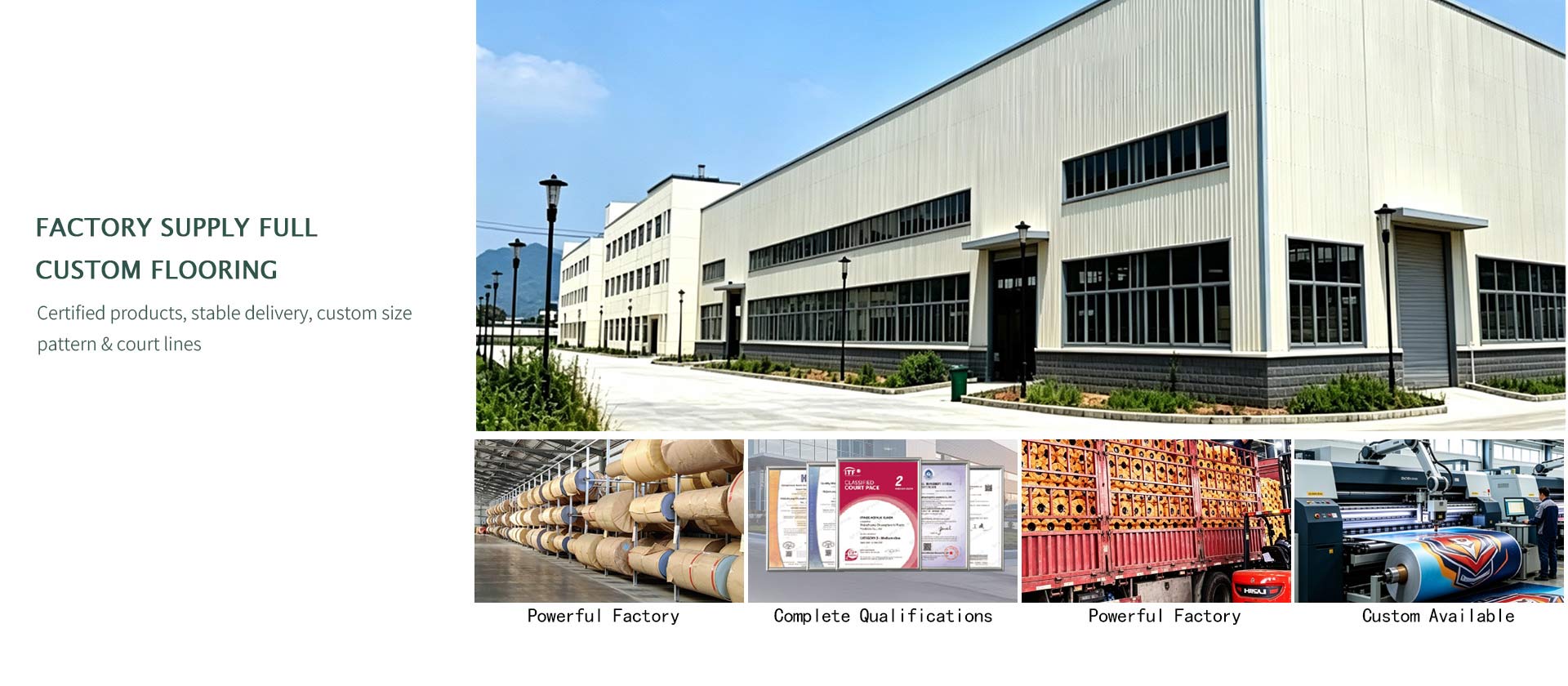
Shijiazhuang Meifen E-Commerce Co., Ltd. develops and manufactures interlocking floor tiles, PVC sports flooring, rubber mats and padel court systems. We supply full flooring solutions to schools, gyms and global buyers. Our 26,000㎡ factory has full production lines , supporting sufficient stock, fast delivery, ISO & CE certified eco-friendly products for worldwide distributors.
- Full one-stop sports flooring solution
- Standard big factory with fast stock shipment
- ISO & CE certified eco-safe floor raw materials
- Stable export volume & global logistics support

00
Manufacturing Experience

00+
Global Venue Cases

00
Factory Area

00+
Exporting Countries
BLOG
Related blogs
17 July,2026
Padel Adds Nearly 8,000 Courts in a Year — Hard Surfaces Start Eating Into Turf’s Market Share
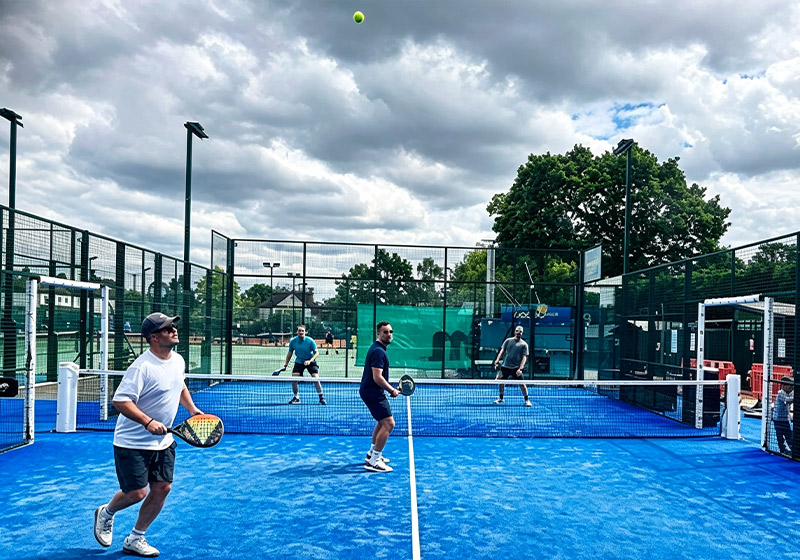
Playtomic and PwC Strategy& publish an annual global padel report, and the 2026 edition is solid: roughly 58,000 courts worldwide, over 20,000 clubs, around 19 million active players. Nearly 8,000 new courts were added in 2025 alone — a 16% year-on-year jump. Industry projections put the total at close to 91,000 courts by 2028.
For the flooring industry, the total number isn’t the real story. The structural shift is.
The first shift: growth is decentralizing. Spain still leads in absolute numbers, but the new courts are increasingly in Indonesia, Brazil, the United States, Australia, India, and Poland. These markets share a common profile — rising disposable income, almost zero existing court stock, and no domestic manufacturing base. Whoever gets in first builds channel stickiness.
The US makes the point vividly: fewer than 800 courts nationwide, but roughly half a million active players. That ratio isn’t “future potential”— it’s”undersupply right now.”
The second shift: surface materials are diverging. Traditionally, sand-filled artificial turf has been the default for padel courts, and the International Padel Federation (FIP) still endorses it. But real-world use reveals friction points — sand needs periodic replenishment, maintenance is heavy, heat absorption under direct sun is brutal, and drainage after heavy rain is slow. In hot-climate markets, project owners are increasingly looking at alternatives.
Poured acrylic is one option — clean appearance, seamless finish. But in tropical conditions it cracks under thermal cycling and requires long curing times.
PP interlocking tiles are the third option, and the one gaining ground fastest. They drain instantly, resist UV degradation, and individual damaged tiles can be swapped without ripping up the whole court. Adoption is especially strong in the UAE, Saudi Arabia, and Southeast Asia — markets where heat and rain are the primary surface killers.
Atelling data point: Mondo was named FIP’s Official Global Turf Partner in April 2024. Note the word — “Turf.” There is currently no equivalent official designation for hard-surface padel courts. That means the hard-surface segment hasn’t been locked down by any dominant brand yet. The window for differentiation is still open.
One more detail that gets overlooked: color. Blue and black now account for nearly 70% of new court installations globally, while green continues to shed share. This isn’t just an aesthetic footnote — manufacturers serving the padel market need to maintain consistent inventory depth in blue and black pigment formulations, especially for UV-stabilized outdoor grades.
Quick math: 8,000 new courts per year, each roughly 200 square meters including playing area and run-off zones, puts annual flooring demand from new padel construction at around 1.6 million square meters. That’s not Earth-shattering volume, but the growth is steady, the customer quality is high, and hard surfaces are still in the penetration phase. Suppliers who move early have a real shot at building channel inertia before the category consolidates.
Please fill out the form below and we will get back to you as soon as possible.