
- Home
- Products
- TPE Interlocking Floor Tiles
- YMQruansu
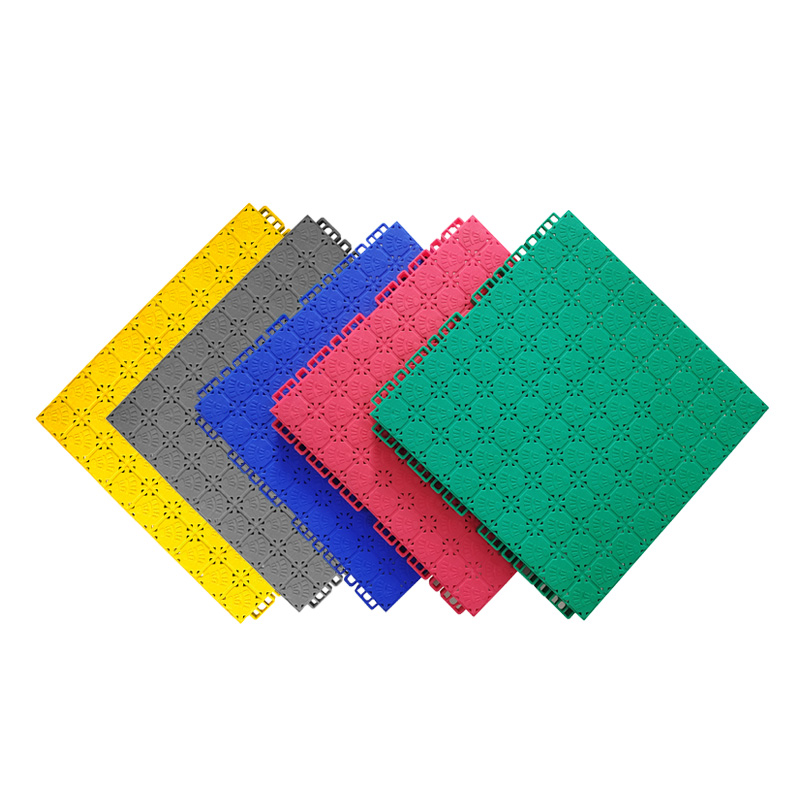
YMQruansu
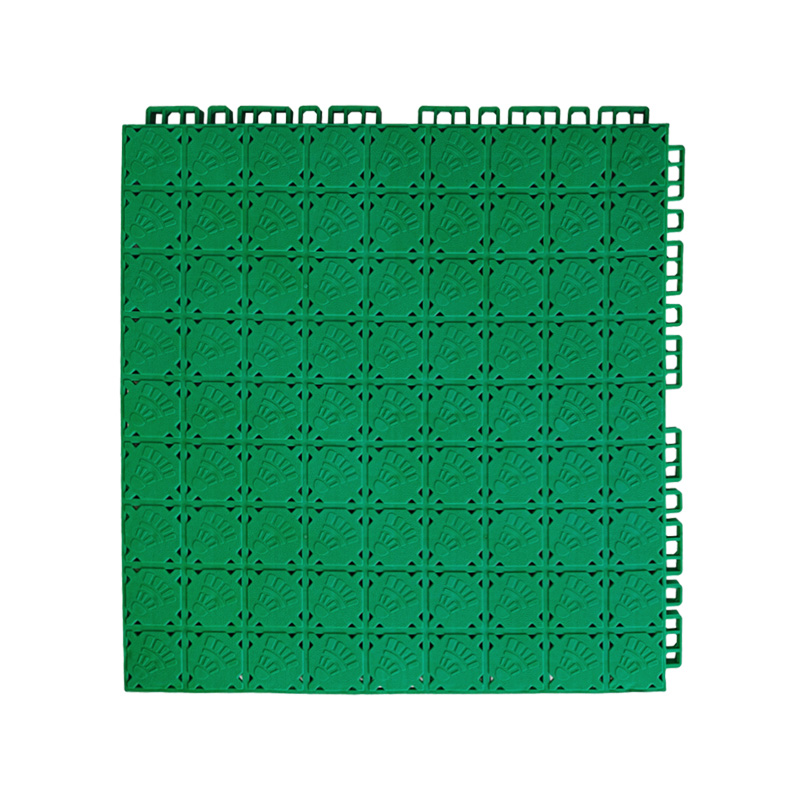
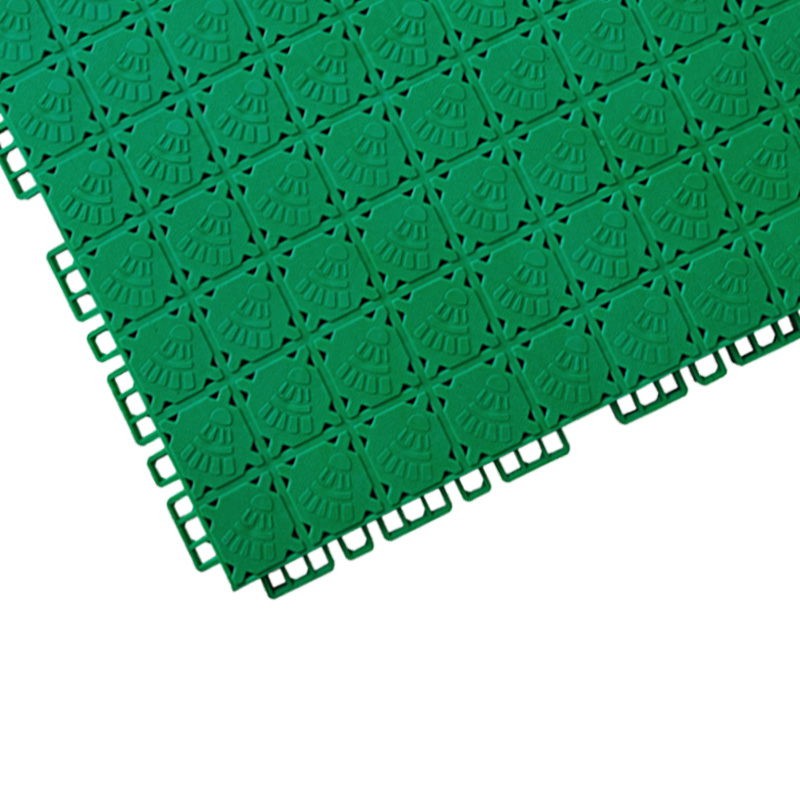
The YMQruansu interlocking sports tile features a badminton-design anti-slip soft-touch surface with a snap-lock interlocking structure for quick assembly. The modified soft base material delivers full, lively sports rebound, along with efficient drainage and excellent moisture and aging resistance.
- Weatherproof and anti-aging, it suits all outdoor sports venues.
- All-Weather Outdoor Durability Modified PP material
- Waterproof Anti-Slip Rapid Drainage
- Tool-Free Snap-Lock Assembly
- Simple Low-Maintenance
Product Description
Parameters
-
Superior Floating Tile Structure
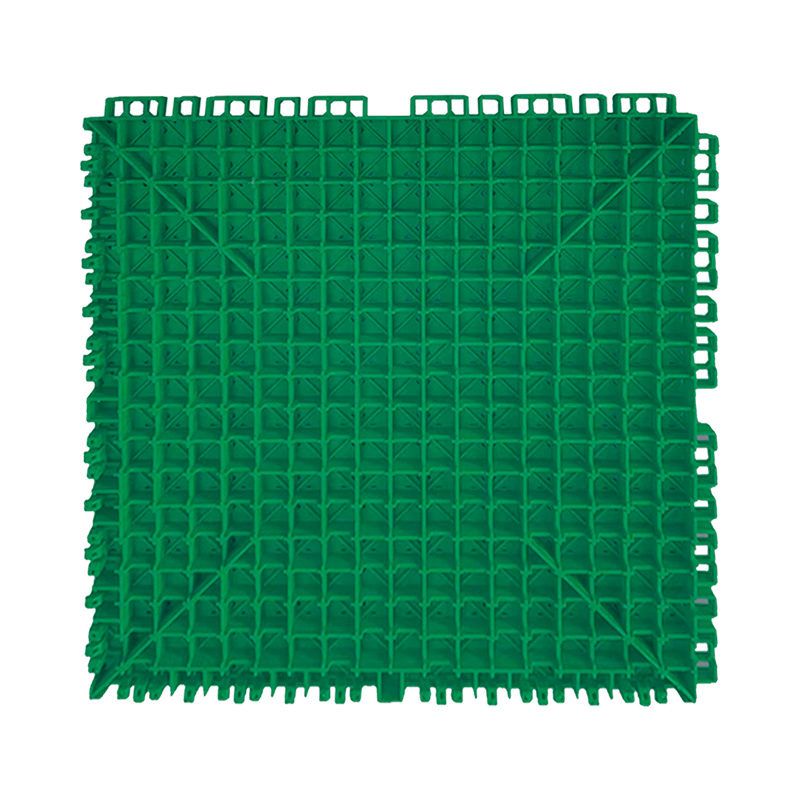
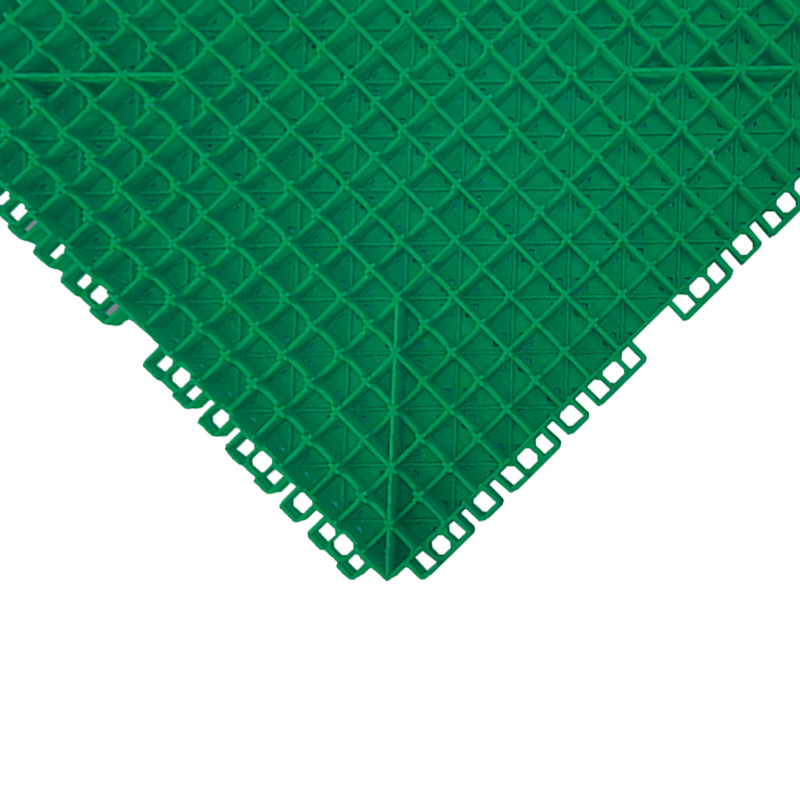
The YMQruansu interlocking sports tile is injection-molded from a single piece of modified soft material, with a badminton-shaped anti-slip granule surface on top and a thickened cross-grid reinforced support skeleton underneath. The soft base material provides full, lively rebound that cushions the impact of running and jumping, protecting knees and ankles. Hollow drainage channels across the surface carry rainwater away quickly, preventing standing water and slippery conditions on the court. Snap-lock interlocking assembly makes installation quick and easy, with strong adaptability to ground conditions — even slightly uneven surfaces can be laid directly. Suitable for year-round indoor and outdoor badminton courts, basketball courts, kindergarten play areas, and all types of multi-purpose sports courts.
-
Precise Structure & Thoughtful Details
Tile size: 34 × 34 × 2.2 cm Weight per tile: 690g The badminton-shaped granule surface texture enhances the friction coefficient with raised particles — stable, reliable grip for quick stops and direction changes, with a thick, comfortable underfoot feel. The multi-layer cross-grid skeleton distributes pressure evenly, significantly boosting the tile's overall compression and load-bearing capacity. The snap-lock tabs bite tightly and securely — no loosening, lifting edges, or shifting under high-frequency running and play. The modified soft base material offers outstanding bending toughness, resists cracking under repeated heavy loading, and holds its shape with minimal deformation over years of use — strong, stable performance.
-
Wide Range of Applications
Suitable for badminton courts, basketball courts, half-court tennis, and other professional ball-sport courts. The thick, soft underfoot feel suits children's play, casual recreation, and daily sports training alike. Widely used in school playgrounds and gyms, community public sports areas, kindergarten activity zones, corporate facility courts, and private backyard courts — commercial and residential, indoor and outdoor.
-
Premium Materials & Outstanding Weather Resistance
Made from high-quality modified soft material with UV and antioxidant additives to resist strong outdoor sunlight, slow fading, and material aging. The material adapts across a wide temperature range — no hardening or brittleness in cold, no softening or deformation in summer heat. Wear-resistant and stain-resistant, it withstands outdoor rain and light acid/alkali exposure, effectively extending the overall service life of your court. Daily maintenance is as simple as hosing it down.
-
Flexible Customization Solutions
Supports personalization for all types of project needs. Multiple standard in-stock color schemes available, with custom zone color coding and court line markings, plus printed brand logos and exclusive patterns. Our design team can develop a tailored layout plan based on your actual site dimensions — building the sports court that fits your project perfectly.


| Item | Parameter |
|---|---|
| Specification | 34 × 34 ×2.2cm |
| Unit Weight | 690 g |
| Material | TPE Soft Plastic |
| Color | Gray, Black, Red, Yellow, Blue, Green etc. |
| Connection | Snap‑lock interlocking |
| Application | Basketball court, badminton court, multi‑sport playground, school & backyard sports court |
RELATED PRODUCTS
PRODUCTS
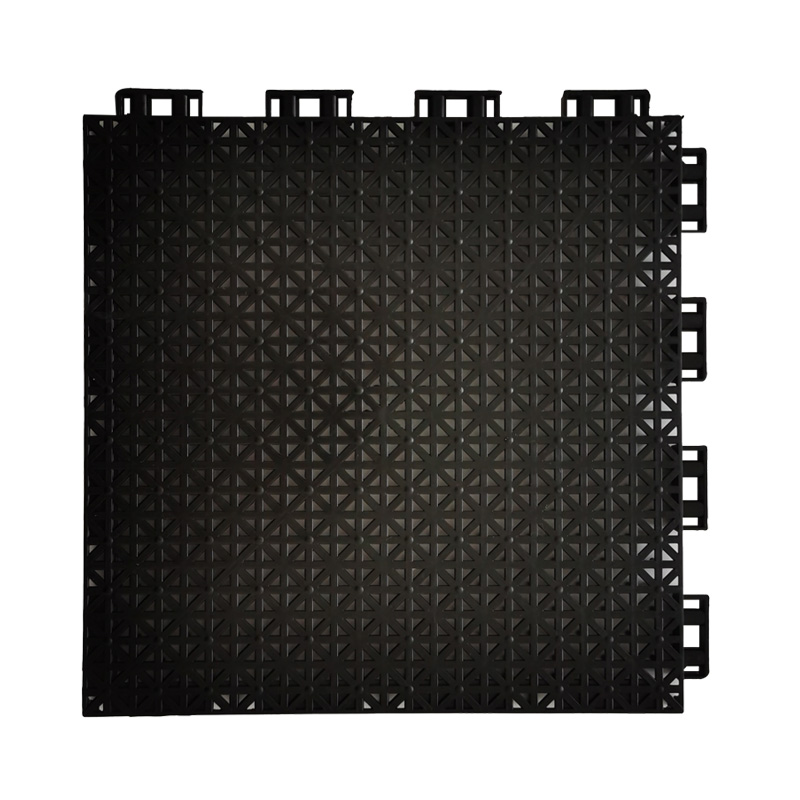
Black Cushion Layer
This black cushion layer is the supporting base plate for sports vinyl flooring — a 25×25cm small-format module used as a floating support layer beneath the vinyl surface. Designed to work with PVC sports flooring, it provides an elevated cushioning structure with drainage and moisture protection.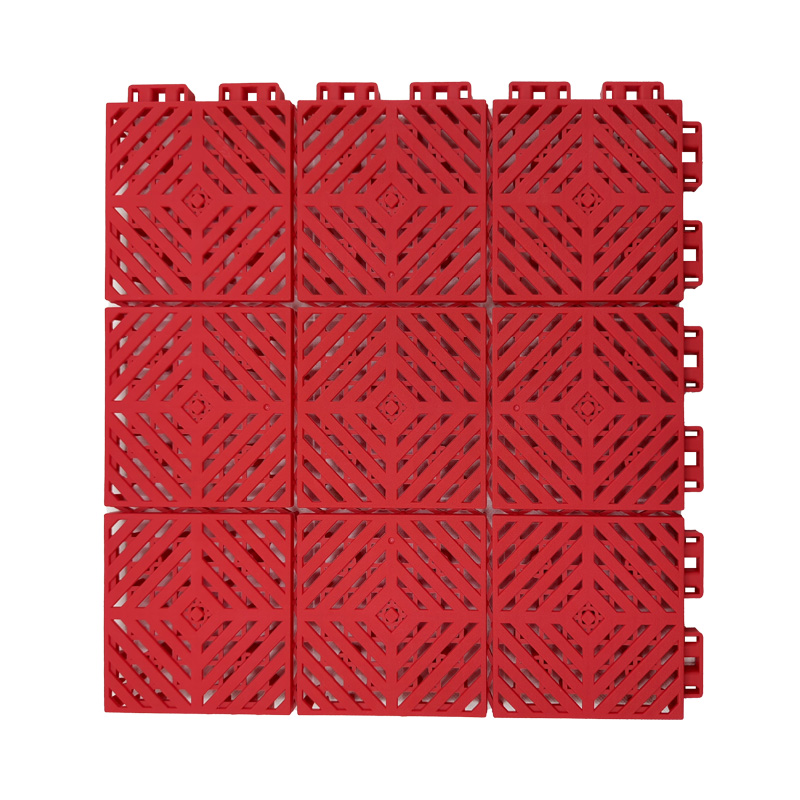
34HZWruanlianjie
The 34HZWruanlianjie tile features a nested square-diamond anti-slip texture with a soft-connect snap-lock structure. The base includes pre-positioned mounting points for optional shock pads, available in two weight and thickness options — suited to a wide range of sports court projects.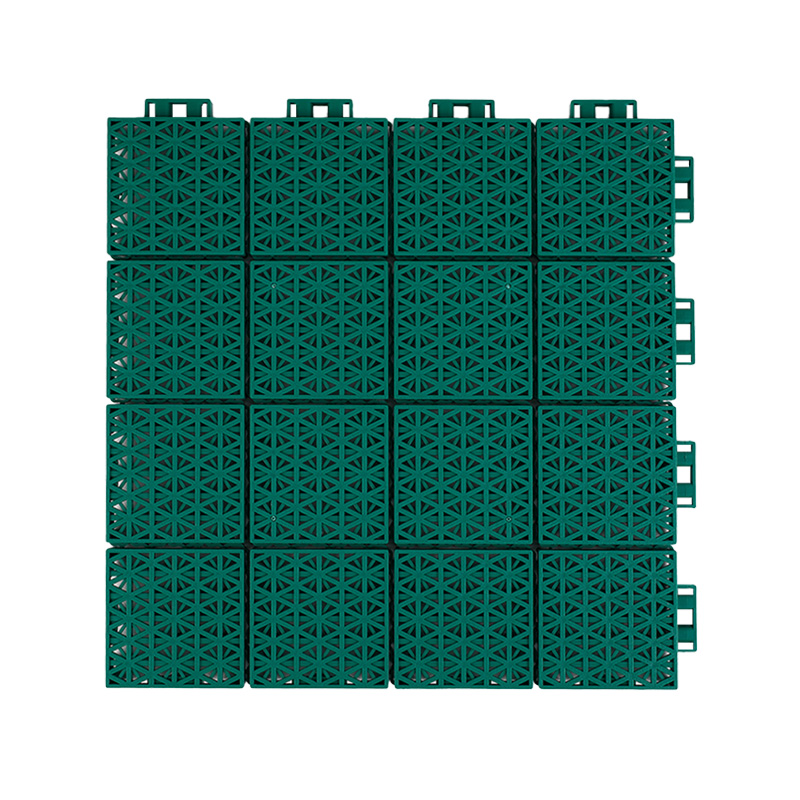
34Ruanlianjie
The 34Ruanlianjie tile features a triangular-grid anti-slip surface with a soft-connect snap-lock structure. At 34cm per tile, the larger size boosts installation efficiency — built for a wide range of outdoor sports courts.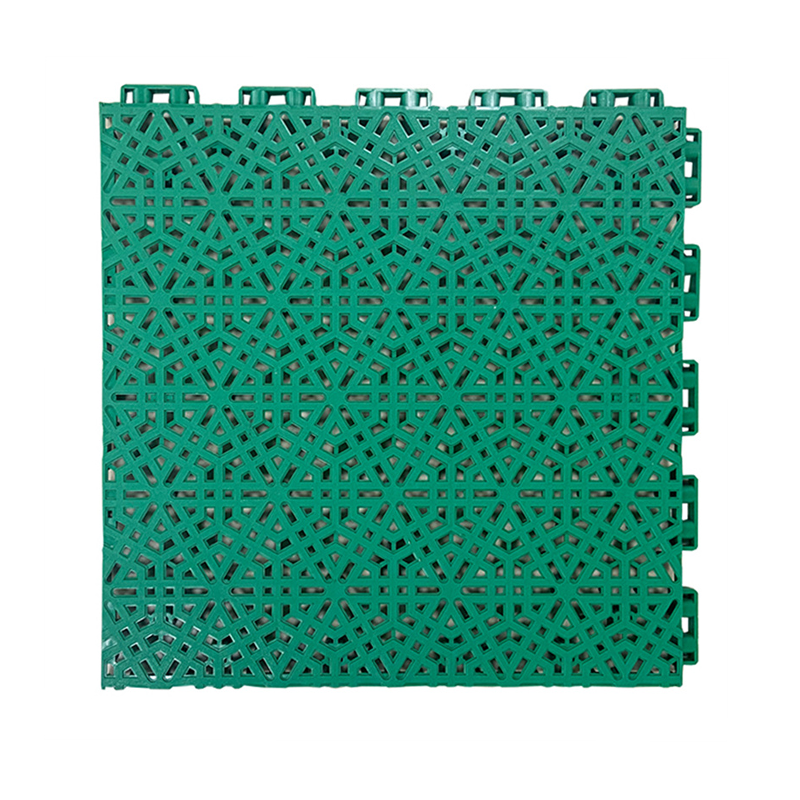
Xinlinghua
The Xinlinghua tile features a radiant diamond-flower hollowed texture with pre-positioned mounting points for optional shock pads. Available in two weight and thickness options at great value, it suits a wide range of sports court projects.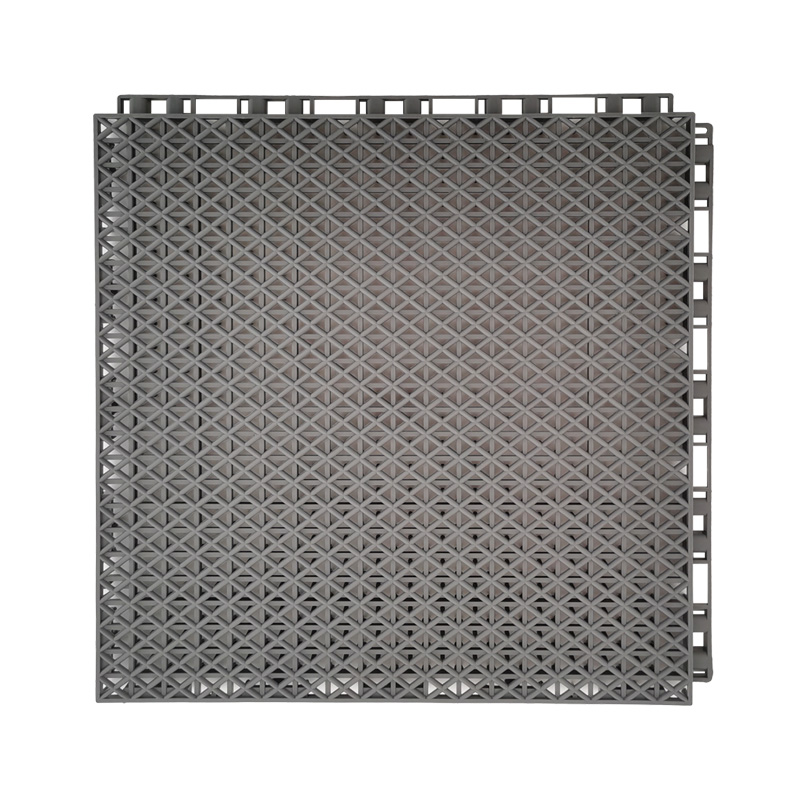
Qingshuang260
The Qingshuang260 tile features a crossed diamond-pattern hollowed surface with a lightweight design. Snap-lock assembly needs no adhesive, and the outstanding value makes it a go-to for a variety of outdoor multi-sport courts.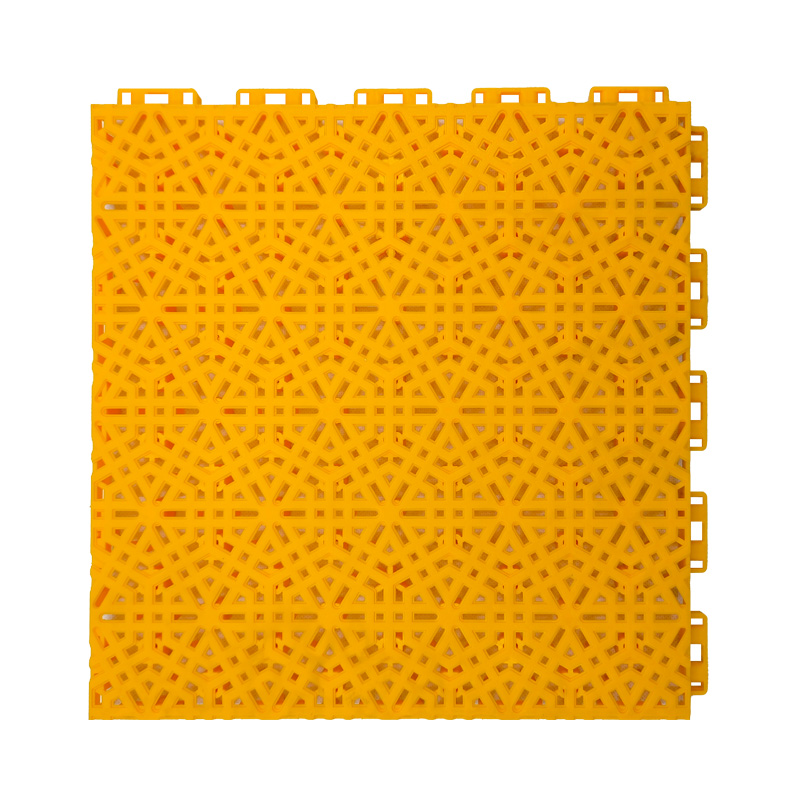
LJlinghua
The LJlinghua tile features a diamond-flower patterned hollowed anti-slip surface with pre-positioned mounting points for optional shock pads. Available in two weight and thickness options, it suits a wide range of outdoor sports courts.
RELATED BLOG
BLOG

10 8 月,2026
Global Sports Flooring Market on Track to Pass $20.9B by 2033 — Three Forces Reshaping the Industry
The global sports flooring market was worth $14.7 billion in 2025, according to a June report from DataM Intelligence, and is expected to clear $20.9 billion by 2033 — growth of roughly 4.6% a year. Indoor sports flooring is moving faster still: $3.45 billion in 2025, climbing to $5.62 billion by 2035 at a 6.2% CAGR.
Three structural shifts are redrawing the demand map.
Sport-by-sport fragmentation. Pickleball, padel, futsal — each new sport brings its own biomechanical requirements: shock absorption thresholds, ball rebound rates, surface friction. A one-size-fits-all product no longer cuts it. Verified Market Reports notes that manufacturers are “adapting by offering customized flooring options” tailored to the specific demands of each activity.
Money is moving outdoors. Climate-resistant materials plus rising outdoor participation are pulling capital away from indoor venues. PP interlocking tiles — UV stabilizers mixed into the material, open-grid drainage built into the design — are steadily replacing poured acrylic and concrete across tropical and subtropical markets.
Regulation is forcing indoor materials to upgrade.California’s Title 24 energy standards are driving demand toward low-VOC synthetic surfaces. In Europe, REACH and RoHS rules are pushing reformulation of the polyurethane binders used in PVC sports rolls. Manufacturers with in-house testing labs and full chemical compliance documentation are pulling ahead of competitors who compete on price alone.
What buyers should take from this: competition at the commodity end — basic PVC rolls, standard rubber tiles — is only going to get tougher, and the margins are moving toward sport-specific systems backed by documented performance data. Distributors bidding on school projects in North America and Europe should look for suppliers who can hand over complete TDS packages and batch-level test reports, not just a certificate.
17 7 月,2026
Padel Adds Nearly 8,000 Courts in a Year — Hard Surfaces Start Eating Into Turf’s Market Share
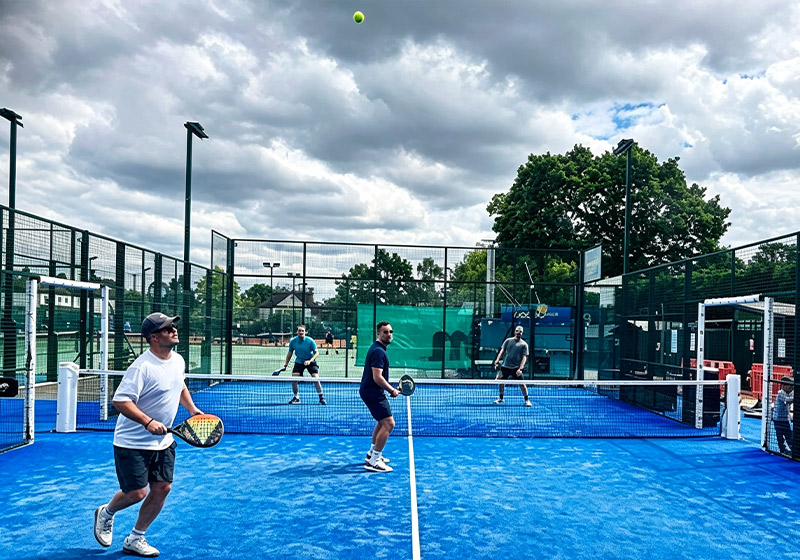
Playtomic and PwC Strategy& publish an annual global padel report, and the 2026 edition is solid: roughly 58,000 courts worldwide, over 20,000 clubs, around 19 million active players. Nearly 8,000 new courts were added in 2025 alone — a 16% year-on-year jump. Industry projections put the total at close to 91,000 courts by 2028.
For the flooring industry, the total number isn’t the real story. The structural shift is.
The first shift: growth is decentralizing. Spain still leads in absolute numbers, but the new courts are increasingly in Indonesia, Brazil, the United States, Australia, India, and Poland. These markets share a common profile — rising disposable income, almost zero existing court stock, and no domestic manufacturing base. Whoever gets in first builds channel stickiness.
The US makes the point vividly: fewer than 800 courts nationwide, but roughly half a million active players. That ratio isn’t “future potential”— it’s”undersupply right now.”
The second shift: surface materials are diverging. Traditionally, sand-filled artificial turf has been the default for padel courts, and the International Padel Federation (FIP) still endorses it. But real-world use reveals friction points — sand needs periodic replenishment, maintenance is heavy, heat absorption under direct sun is brutal, and drainage after heavy rain is slow. In hot-climate markets, project owners are increasingly looking at alternatives.
Poured acrylic is one option — clean appearance, seamless finish. But in tropical conditions it cracks under thermal cycling and requires long curing times.
PP interlocking tiles are the third option, and the one gaining ground fastest. They drain instantly, resist UV degradation, and individual damaged tiles can be swapped without ripping up the whole court. Adoption is especially strong in the UAE, Saudi Arabia, and Southeast Asia — markets where heat and rain are the primary surface killers.
Atelling data point: Mondo was named FIP’s Official Global Turf Partner in April 2024. Note the word — “Turf.” There is currently no equivalent official designation for hard-surface padel courts. That means the hard-surface segment hasn’t been locked down by any dominant brand yet. The window for differentiation is still open.
One more detail that gets overlooked: color. Blue and black now account for nearly 70% of new court installations globally, while green continues to shed share. This isn’t just an aesthetic footnote — manufacturers serving the padel market need to maintain consistent inventory depth in blue and black pigment formulations, especially for UV-stabilized outdoor grades.
Quick math: 8,000 new courts per year, each roughly 200 square meters including playing area and run-off zones, puts annual flooring demand from new padel construction at around 1.6 million square meters. That’s not Earth-shattering volume, but the growth is steady, the customer quality is high, and hard surfaces are still in the penetration phase. Suppliers who move early have a real shot at building channel inertia before the category consolidates.
RELATED SERVICE
SERVICE

Padel Court | Technical Services
For overseas construction contractors and wholesale distributors, complete technical documentation at the purchasing stage is essential — it’s the core material for verifying product performance, matching local building codes, and completing project approval. As a direct-source manufacturer, we provide fully standardized performance specifications and a digital technical document package to build trust with international clients quickly. 1. Complete Standardized Technical Specifications All parameters are compiled from our factory’s mass-production quality control standards and third-party testing reports, suitable for project submissions covering private backyard courts, commercial clubs, hotel resorts, and municipal public padel facilities. 1.1 Court Base Dimensions & Specifications – International standard outer dimensions: 20m (L) × 10m (W); total artificial turf area 210m² – Tempered glass panels:2m × 3m per panel, 12mm thickness, 18 panels per full set – Mesh fence panels: 2m × 1m, 46 panels per set, with dedicated protective netting – Lighting:4 integrated curved light poles with 4×400W professional LED court lights – Accessories: tournament-standard net posts + complete padel center net, meeting official competition requirements 1.2 Four Structural Frame Configurations PC — Panoramic 8 standard columns + 4 corner posts; 8 upper and 8 lower crossbeams on the long sides, 8 upper and 8 lower on the short sides. Balanced structure at a great value — the standard choice for overseas backyards. SPC — Super Panoramic Simplified crossbeam layout with no unnecessary horizontal obstructions — an open, unobstructed view. Positioned for mid-to-high-end clubs and resorts. CPC — Classic with Crossbeam 12 raised columns + 4 double corner posts; 36 full-span upper and lower crossbeams across the court. Maximum structural rigidity, wind- and quake-resistant — built for coastal commercial venues in rainy, windy regions. CPCN — Classic without Crossbeam 12 raised columns + 4 double corner posts; no overhead full-span crossbeams — a clean, minimalist, premium look. The top pick for trendy clubs and high-end private villas. 1.3 Artificial Turf Performance Parameters – Material:PE curled sports artificial turf with UV stabilizers – Structure:Composite drainage backing with built-in fast-drainage pores – Performance:Wear-resistant, aging-resistant, sun-fade resistant; ball speed and bounce meet international padel tournament standards; all-weather outdoor suitability 1.4 Steel Structure Weather Resistance – Anti-corrosion treatment: Full hot-dip galvanized base + outdoor electrostatic powder coating — dual-layer protection – Operating temperature range:Stable from -25°C to 60°C; resistant to rust and paint peeling even in coastal salt-spray environments – Structural strength: Modular steel tubes meet load-bearing standards; impact-resistant and deformation-resistant; outdoor service life of 10+ years 1.5 Safety Glass Protection 12mm thick tempered safety glass with rounded, impact-protected edges. On impact, it shatters into small, blunt granules with no sharp edges — reducing injury risk and meeting overseas sports facility safety standards. 2. Raw Material Standards – Steel frame tubing:New, thickened steel tubes with full hot-dip galvanized anti-corrosion treatment — no thin recycled stock, no cheap cold-galvanizing. All connecting fasteners are stainless steel for outdoor rust resistance. – Tempered glass: Meets international safety glass testing standards — uniform transparency, impact-resistant, with protective edge treatment as standard. – Artificial turf:100% virgin PE raw material, no recycled scrap; anti-aging additives added; passed third-party abrasion and weathering testing. – LED lighting:High-brightness, waterproof luminaires — dust-proof and rain-proof, with even night-time illumination and no dark spots, suitable for long hours of commercial and tournament use. – Fence mesh: Galvanized, PVC-coated steel wire mesh with standard openings — tear-resistant and UV-resistant, no weathering or breakage through long-term outdoor exposure. 3. Complete Standardized Technical Document Package for Export 3.1 Padel Court Technical Data Sheet (TDS) Full dimensions, materials, and physical performance parameters for all four styles in a standardized table format — ready for overseas project bidding and court approval submissions. 3.2 Full PDF Material & Structure Manual Includes parts breakdown for all four styles, frame structure exploded diagrams, material test indicators, and installation parts lists. 3.3 Style-Specific Structure Drawings Independent structure diagrams and component exploded drawings for PC/SPC/CPC/CPCN — with complete parts lists covering columns, crossbeams, light poles, glass panels, and mesh frames. 4. One-Stop Technical Value-Added Services for Overseas Distributors & Contractors Online Professional Parameter Consultation Our technical team explains the structural differences and material performance of all four court styles remotely, helping you communicate with local project owners, supervisors, and approval authorities to resolve every technical question. Third-Party Testing Support (On Demand) If your local project requires additional testing, we can ship complete samples for you to arrange third-party laboratory performance testing independently. Fast Bulk Document Delivery All structure drawings, technical manuals, and test documents are compressed into one package and sent instantly via email or WhatsApp — easy for distributors to forward to local construction teams and project owners. Remote Installation Guidance Illustrated tutorials plus English video installation guides, with step-by-step assembly instructions specific to each frame type — PC, SPC, CPC, and CPCN — plus real-time online support for tricky installation points. Customization Services Adjustable powder-coating colors for the steel frame and turf color schemes; accessory configurations can be fine-tuned to site conditions; limited non-standard size customization available. 5. Core Advantages of Buying Direct from the Factory Most trading companies can only supply scattered, basic parameters — they can’t produce complete structure drawings and standardized technical documentation. As a source factory with full in-house production lines and a mature quality inspection system, we provide: – Complete standardized dimensions, materials, and structural parameters for all four court styles – Professional technical drawings and documents ready for project approval and bidding – Complete parts lists that significantly simplify overseas clients’ purchasing, construction, and approval processes – Clear source-factory material and process credentials that strengthen clients’ competitiveness in court project tenders
PVC Sports Flooring | Technical Services
For overseas construction contractors and wholesale distributors, complete technical documentation is essential during the purchasing stage — it’s what you use to verify that product performance meets local building standards and project approval requirements. As a direct-source manufacturing factory, we provide fully standardized performance specifications and digital technical documents to build trust with international buyers fast. 1. Complete Standardized Performance & Technical Specifications All parameters come from our factory’s years of mass-production quality control standards and third-party testing report data, suitable for project submissions covering overseas private courts, commercial sports halls, and school sports facilities. 1.1 Raw Materials & Thickness Options – Construction:Premium PVC wear layer + fiberglass stabilization layer + elastic foam cushioning layer – Material quality:100% virgin raw materials — no recycled scrap, no low-grade fillers – Available thicknesses: 4.0mm / 4.5mm / 6.0mm / 8.0mm, custom thicknesses available on request – Structure:Wear-resistant top layer, fiberglass dimensional stability layer, and high-density foam cushioning base fused into one composite 1.2 Weather & Aging Resistance – UV stabilizers added to the formulation (outdoor-modified version) – Tested to outdoor weathering standards – Resists fading, surface chalking, and cracking over long-term use – Handles high-temperature and high-humidity environments; the standard indoor version is not recommended for prolonged direct sun exposure 1.3 Load-Bearing & Compression Performance – Meets compressive load standards for professional sports surfaces – Withstands high-frequency foot traffic and play — suitable for commercial sports halls, schools, and public sports venues 1.4 Dry & Wet Slip Resistance (Coefficient of Friction) – Surface grain texture has passed friction coefficient testing – Maintains stable anti-slip grip on both dry and wet surfaces – Meets overseas indoor sports floor safety standards, reducing the risk of falls during quick stops and direction changes 1.5 Low-Temperature / Cold Resistance – Modified formulation stands up to cold environments – Cold-resistant down to -25°C / -13°F — the outdoor-modified version resists brittle cracking and shrinkage deformation in low temperatures 1.6 Rebound & Shock Absorption – Foam cushioning layer delivers excellent sports rebound performance – Absorbs impact from running and jumping, protecting knees and ankles — ideal for pickleball, badminton, basketball, and other sports with heavy lateral movement 1.7 Water & Stain Resistance – Dense PVC surface is waterproof and non-absorbent – Stains rinse off with plain water — nothing soaks in or lingers, so daily upkeep is simple 1.8 Expected Service Life – Based on feedback from numerous completed projects at home and abroad – Indoor normal use: 7–8 years; outdoor-modified version in exposed conditions: 5 years 2. Complete Standardized Technical Document Package for Export 2.1 PVC Sports Flooring — Technical Data Sheet (TDS) A consolidated data sheet covering all key physical performance parameters, laid out in a professional table format — ready to use for overseas project bidding and site approval submissions. 2.2 Product Material & Performance Specification Document (PDF) A complete PDF aggregating all performance details: raw material description, weather resistance, slip resistance, rebound, cold resistance, fire rating, abrasion resistance, and more. 3. One-Stop Technical Value-Added Services for Overseas Distributors & Contractors 3.1 Online Professional Parameter Consultation Our technical team walks you through every product performance indicator remotely, helping you communicate with local project owners, engineering supervisors, and approval authorities to resolve any technical questions. 3.2 Third-Party Testing Support (On Demand) If your local project requires additional testing, we can ship samples for you to arrange third-party laboratory testing independently. 3.3 Bulk Document Delivery All technical documents are compiled into a single package and sent quickly via email or WhatsApp — easy for distributors to forward to their own contractor and engineering clients. 4. Core Advantages of Buying Direct from the Factory Most trading companies can only offer scattered, basic parameters — they can’t produce a complete, standardized technical document set. As a source factory with our own production lines and a mature quality control system, we provide: – Fully standardized product performance specifications – Professionally formatted technical documents ready to download and use – A complete document package that significantly simplifies overseas clients’ project approval processes – Clear, direct evidence of source-factory supply advantages – A stronger competitive edge in sports court project tenders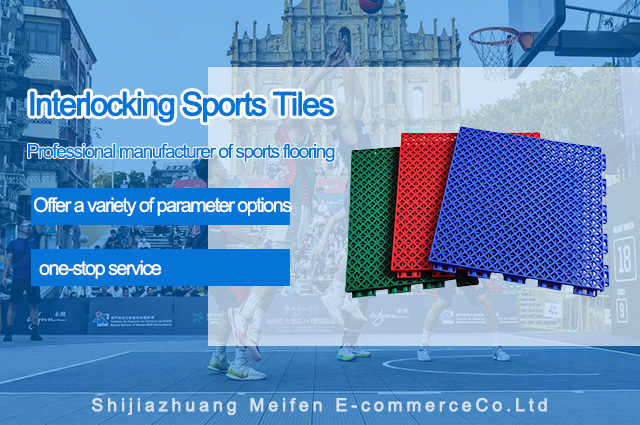
Interlocking Sports Tiles l Technical Services
For overseas construction contractors and wholesale distributors, technical documentation is essential during the procurement phase — it’s used to verify whether product performance meets local construction standards and project approval requirements. As a direct-source manufacturing factory, we provide complete, standardized product performance specifications and digital technical documentation to quickly build trust with international buyers. 1. Full Standardized Performance & Technical Specifications All parameters are based on our factory’s years of mass-production quality control standards and Chinese national testing report data, suitable for project submissions covering overseas private gardens, commercial sports halls, and school sports courts. 1.1 Raw Material & Density Specifications – Primary materials: High-density modified polypropylene (PP) and soft thermoplastic elastomer (TPE) – Raw material ratio: Stable and consistent — zero recycled or low-grade filler content – Material integrity: Virgin-grade polymers only; no mixed recycled plastics 1.2 UV Resistance & Weathering Performance – UV stabilizers added during the production process – Formulated to outdoor weathering standards – Long-term outdoor exposure does not cause fading, cracking, or embrittlement – Suitable for high-temperature, heavy-rain, and other harsh outdoor environments 1.3 Load-Bearing Performance – Meets standard static load requirements for conventional sports surfaces – Suitable for public sports courts and commercial sports venue applications 1.4 Dry & Wet Slip Resistance (Coefficient of Friction) – Surface anti-slip texture has undergone standard friction testing – Maintains consistent grip on both dry and wet surfaces – Meets overseas outdoor sports field safety requirements – Reduces slip risk during wet-weather play 1.5 Low-Temperature / Freeze Resistance – Formulation engineered for low-temperature environments – Withstands temperatures as low as -30°C / -22°F – No cracking or deformation during long-term outdoor installation in cold-climate regions 1.6 Superior Drainage Efficiency – Hollow integrated grid drainage structure – Excellent drainage speed — rainwater quickly permeates and drains away – Eliminates standing water and muddy surface issues on outdoor courts 1.7 Expected Outdoor Service Life – Based on years of feedback from completed projects both domestically and internationally – Normal outdoor service life: 10+ years 2. Complete Standardized Foreign Trade Technical Document Package 2.1 Interlocking Sports Tiles — Technical Data Sheet (TDS) A consolidated technical data sheet covering all fundamental physical performance parameters, formatted in a professional table layout — suitable for overseas project bidding and site approval submissions. 2.2 Product Material & Performance Specification Document (PDF) A complete PDF document aggregating all product performance details: raw materials, weather resistance, slip resistance, drainage, freeze resistance, and more. 3. One-Stop Technical Value-Added Services for Overseas Distributors & Contractors 3.1 Online Professional Parameter Consultation Our technical team provides remote walkthrough explanations of all product performance indicators, helping clients communicate with local project owners, site inspectors, and approval bodies to resolve technical questions. 3.2 Third-Party Testing Support (On Demand) If a client’s local project requires additional testing, we can ship product samples for the client to independently arrange specialized third-party laboratory testing. 3.3 Bulk Document Delivery All technical documentation is compiled into a single compressed package and sent quickly via email or WhatsApp — making it easy for distributors to forward to their own engineering and contractor clients. 4.Core Advantages for Overseas Buyers Most trading companies can only provide scattered, basic parameters without standardized technical documentation packages. As a factory with a complete in-house production line and a mature quality control system, we offer: – Full standardized performance specifications – Downloadable, professionally formatted technical documents – A comprehensive document set that significantly streamlines overseas clients’ project approval processes – Clear, tangible proof of direct factory supply advantages – Enhanced competitiveness in sports court project bidding
JOIN US
LOVE TO HEAR FROM YOU GET IN TOUCH!
Please fill out the form below and we will get back to you as soon as possible.