
Global Sports Flooring Market on Track to Pass $20.9B by 2033 — Three Forces Reshaping the Industry
The global sports flooring market was worth $14.7 billion in 2025, according to a June report from DataM Intelligence, and is expected to clear $20.9 billion by 2033 — growth of roughly 4.6% a year. Indoor sports flooring is moving faster still: $3.45 billion in 2025, climbing to $5.62 billion by 2035 at a 6.2% CAGR.
Three structural shifts are redrawing the demand map.
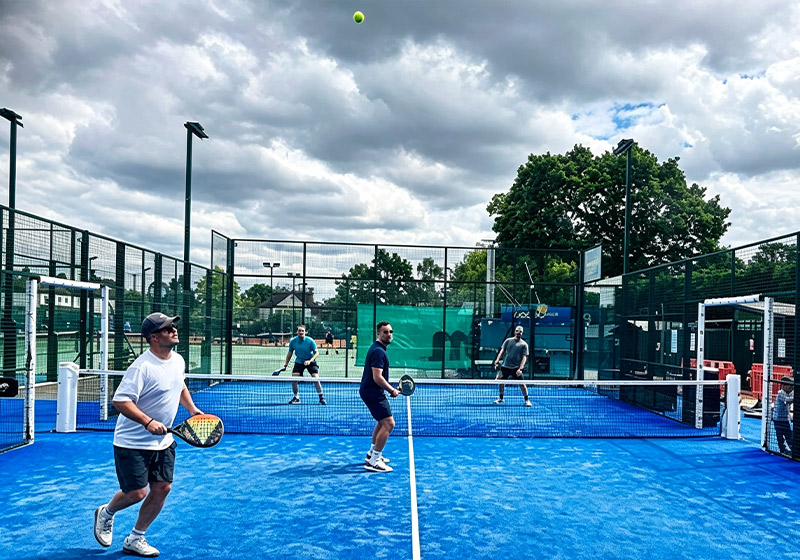
Sport-by-sport fragmentation. Pickleball, padel, futsal — each new sport brings its own biomechanical requirements: shock absorption thresholds, ball rebound rates, surface friction. A one-size-fits-all product no longer cuts it. Verified Market Reports notes that manufacturers are “adapting by offering customized flooring options” tailored to the specific demands of each activity.
Money is moving outdoors. Climate-resistant materials plus rising outdoor participation are pulling capital away from indoor venues. PP interlocking tiles — UV stabilizers mixed into the material, open-grid drainage built into the design — are steadily replacing poured acrylic and concrete across tropical and subtropical markets.
Regulation is forcing indoor materials to upgrade.California’s Title 24 energy standards are driving demand toward low-VOC synthetic surfaces. In Europe, REACH and RoHS rules are pushing reformulation of the polyurethane binders used in PVC sports rolls. Manufacturers with in-house testing labs and full chemical compliance documentation are pulling ahead of competitors who compete on price alone.
What buyers should take from this: competition at the commodity end — basic PVC rolls, standard rubber tiles — is only going to get tougher, and the margins are moving toward sport-specific systems backed by documented performance data. Distributors bidding on school projects in North America and Europe should look for suppliers who can hand over complete TDS packages and batch-level test reports, not just a certificate.
OUR FACILITIES
Professional One-Stop Sports Flooring Manufacturer & Global Supplier
Please fill out the form below and we will get back to you as soon as possible.